
Why A LOCAL Green Economy? A Lead From Philadelphia…
Green Oz, One Of World’s Top Eco-Tourism Destinations…
January 31, 2008Think Global, Eat Local: A Diet For A Sustainable Society
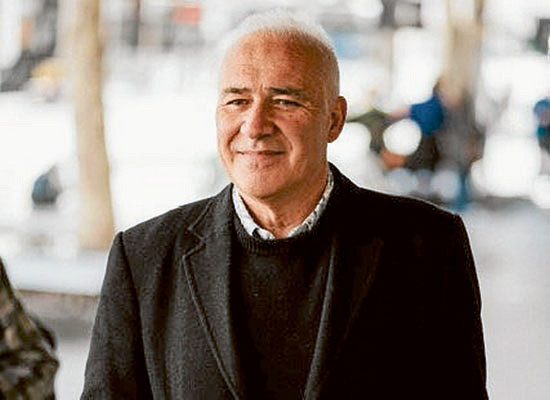
January 31, 2008Anyone interested in setting up a Green Map project for their region will be interested in Judy Wicks’ approach to sustainable development. Judy is a national leader in the North American local, living economies movement.
A lot of us would love to see OUR region as a:
“a fertile marketplace for green businesses with a growing creative class of designers, inventors, and entrepreneurs, artists and musicians, dress and furniture makers, supported by consumers with a high demand for all things local.”
Especially if, as Judy says:
“Best of all, this is fun! Building a sustainable local economy is not only about our responsibility to future generations, but also about reconnecting with place and with each other, building community and local culture and identity, and increasing the happiness and collective joy that come from working collaboratively toward a shared vision. As we say at the Sustainable Business Network (SBN), we’re building a merry mecca! And one that will provide for our survival in a changing world.”
Building a Local Green Economy in Greater Philadelphia
Judy writes:
“Let’s face it – we’ve got to change or die! If our civilization doesn’t stop destroying the natural systems on which life depends, sooner or later our existence on planet Earth will come to an end. Our economy and lifestyles consume and pollute beyond Earth’s capacity to sustain us. Confronting global warming, the end of oil, and the depletion of all natural resources is complex and overwhelming, but we can gain clarity and direction by focusing right here at home. By working together, local government, entrepreneurs, farmers, artisans, educators, and citizens can build a local economy that works in harmony with natural systems to serve the needs of our region. At the same time, we can inspire a community-wide commitment to reducing overall consumption and waste.
Why local? Local production of basic needs – food, housing, clothing, energy, and culture – builds community wealth, increases our regional self-reliance and security, and eliminates the carbon emissions caused by long-distance transport – a major contributor to global warming. Just as we now measure “food miles,” the distance from farm to table, we need to become conscious of the miles all goods travel. Our dependence on remote corporations to ship basic needs long-distance leaves us vulnerable to the instability of climate change and rising oil prices. Local production allows direct relationships with producers and transparency of production practices, with the opportunity to teach, share, and incentivize sustainable business practices – from organic agriculture to zero-waste manufacturing, green building, and renewable energy.
Though our federal government has largely become a vehicle for protecting corporate interests, local governments have the opportunity to design economic development strategies based on local business ownership, replacing corporate imports with local production. Rather than attracting multi-national corporations and chain stores, let’s line our commercial corridors with locally owned retailers selling locally made clothes, food, handicrafts, and other locally manufactured products. While we are building a local green economy, let’s also make it fair. The prevailing economy not only puts us at risk by being at odds with nature, but as a profit-driven, competition-based system, it also puts us at odds with each other, leaving many disenfranchised. The increase in violence globally and in our own streets is a manifestation of the despair and anger of those who feel left out. In a cooperative economy, driven by a desire to serve the common good and bring long-term prosperity to our region, we can develop a strategy that provides ownership opportunities in the local green economy for those who have been left out of the corporate global economy.
Through local leadership and citizen support, our region has made great progress in building a local food system to provide fresh, healthy food to our communities. Let’s continue to build our marketplace for local sustainable agriculture that maintains healthy soil and water quality in our region. Now we need to develop local food processing businesses to increase our food security, and more neighborhood grocery stores selling local food products. We need local companies to manufacture and install solar energy systems and energy efficient windows, and use sustainably harvested local timber and other indigenous building materials. How about a revived garment industry using sustainable fibers harvested in our region? We need manufacturers committed to finding productive use of waste materials, and more retailers selling recycled and reused products. Our state ranks high in wind energy production, and recycled biodiesel projects are sprouting up throughout the region. Much innovation is underway on which to build. Many local green businesses can be found in the Sustainable Business Network.
Here’s how you can help:
Buy local food.
Support local retailers.
Buy local, renewable energy.
Invest locally.
Join with other green local businesses, learn to start a business, or find a local business to buy from: www.sbnPhiladelphia.org.”
About Judy Wicks And White Dog Community Enterprises
Judy Wicks is owner and founder of Philadelphia’s 24-year-old White Dog Cafe. She is co-founder and co-chair of the national Business Alliance for Local Living Economies (BALLE), and founder of the Sustainable Business Network of Greater Philadelphia (SBN). She is also president of the White Dog Community Enterprises (formerly White Dog Cafe Foundation), a non-profit organisation dedicated to building a local living economy in the Philadelphia region.
Sustainable Business Network (SBN) History
Judy began meeting with other like-minded business owners in the Philadelphia area and talking up her vision of a sustainable local economy until she built the Sustainable Business Network of Greater Philadelphia, founded in 2001. Today SBN Philly has more than 300 members representing the seven main building blocks of a local living economy:
- sustainable agriculture
- renewable energy
- green building
- zero-waste manufacturing
- independent media
- downtown retail
- community capital
SBN has identified another 20 or so building blocks. They offer educational programs and networking opportunities for local businesses, to strengthen member companies and help build a strong Philadelphia economy.
Judy’s Numerous Awards And Accolades
- The prestigious Business Enterprise Trust award, founded by Norman Lear, for creative leadership in combining sound business management with social vision
- Business Ethics Magazine’s first ‘Living Economy Award’
- The James Beard Foundation’s Humanitarian of the Year, 2005
- American Benefactor’s ‘America’s 25 Most Generous Companies’
- Oprah Magazine’s ‘5 Amazingly Gifted and Giving Food Professionals’
- Inc. Magazine’s 25 favorite entrepreneurs in the country
A good reference point for Australian community efforts?

3 Comments
A practical tool for creating one of the cornernstones of a sustainable economy – a robust food system – is SPIN-Farming.
SPIN-Farming is a non-technical, easy-to-learn, inexpensive-to-implement farming system that makes it possible to earn significant income from land under an acre in size. Minimal infrastructure, reliance on hand labor to accomplish most farming tasks, utilization of existing water sources to meet irrigation needs, and situating close to markets all keep investment and overhead costs low. SPIN therefore removes the 2 big barriers to entry for new farmers – they don’t need a lot of land or money – and it makes farming compatible with densely populated areas.
SPIN is being practiced by a growing corps of backyard, front lawn and small lot farmers throughout the U.S. and Canada. Free-2-Run Farm is the first Australian SPIN farm, located in Armidale. You can see this farm and others in the gallery area of the SPIN-Farming web site – http://www.spinfarming.com
Great thread, as Michael Pollan points out so eloquently in “The Omnivore’s Dilemma”, our current system of industrial agriculture is unsustainable in the long term. I would encourage all to think beyond the obvious in your concern for the planet. My particular expertise is coffee… many people think organic and shade grown when they buy, which is great. But have you thought about HOW your coffee was roasted? It turns out that consumer packaging and roasting equipment contribute more to the carbon footprint than any activity at the point of origin. Our roastery, the Muddy Dog Coffee Co., has invested in a state-of-the-art, environmentally friendly roaster with virtually no emissions, and 90% less power consumption than a traditional roaster. Our customers appreciate what we’re doing for the planet, and it makes good business sense, too – we’re better neighbors with no nuisance smoke, and lower fuel bills. There are others like us (though not too many yet) – look for them and support them when you find them.
[…] “Can Do Community Blog”, Pigs Will Fly asks and offers why a local green economy should be pursued by a community. Why local? Local production of basic needs – food, housing, clothing, energy, and culture – […]